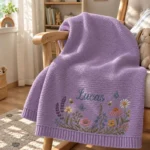
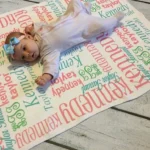
A baby name quilt pattern is a quilt design that places a child’s name into fabric blocks, appliqué, embroidery, or pieced letters. Start by checking the name length, letter size, spelling, seam allowance, layout, and intended use before cutting fabric.
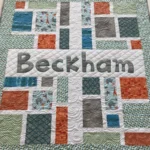
A baby name quilt pattern turns a name into the visual center of a keepsake. The design may use one large name, separate letter blocks, a monogram, or a name surrounded by stars, animals, flowers, geometric shapes, or other simple motifs.
The most important planning choice isn’t the decoration. It’s making sure the name remains easy to read after seams, quilting, washing, and normal viewing distance are considered. A simple layout often works better than a crowded one.
name quilt layout
personalized quilt planning
What a Baby Name Quilt Pattern Includes
A baby name quilt pattern gives you a plan for placing letters, background blocks, borders, and decorative shapes. It may be a full cutting plan with measurements, or it may be a flexible sketch showing the order and proportion of each section.
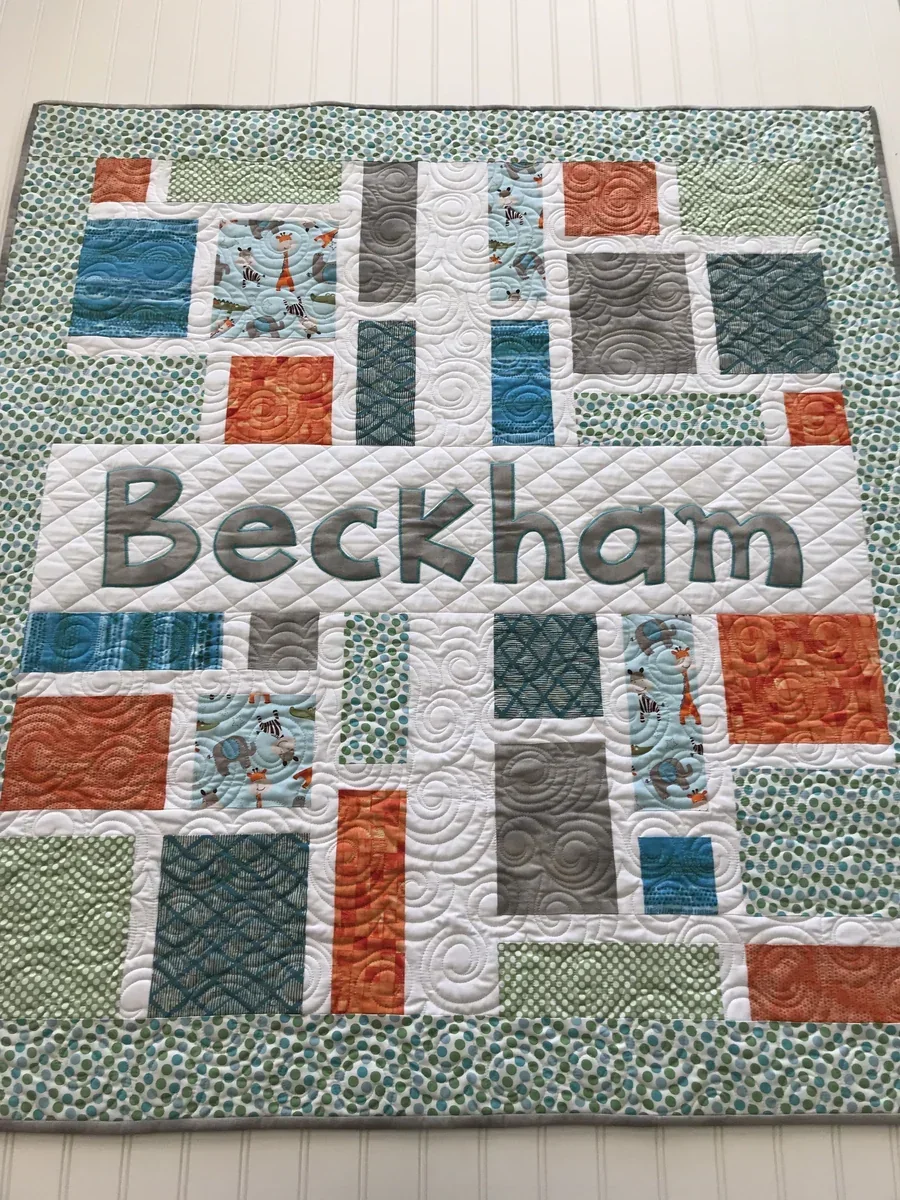
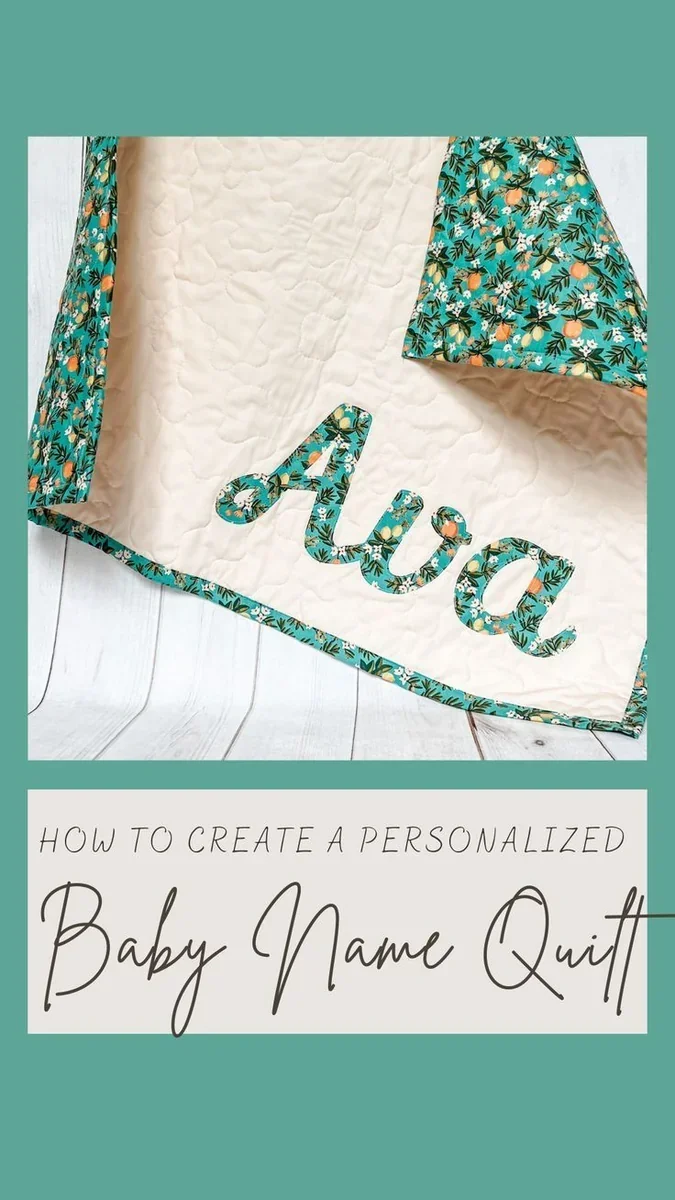
Before choosing a format, decide how the name will appear. Appliquéd letters sit on top of a background. Pieced letters are built from smaller fabric pieces. Embroidered lettering uses a stitched line or filled shape. Printed or transferred lettering can create a clean outline, but the method must suit the fabric and the quilt’s intended care routine.
Names with many letters need more planning than short names. A long name may fit best across the quilt, while a short name can work as a central panel with generous space around it. A hyphen, apostrophe, accent mark, or compound name also needs to be included in the early sketch rather than added as an afterthought.
Confirm the exact spelling before cutting. A quilt is difficult to correct once letters have been sewn into several blocks. If the family has selected a diacritic or a specific capitalization style, copy it exactly in the working sketch.
Choose the Name Layout Before the Fabric
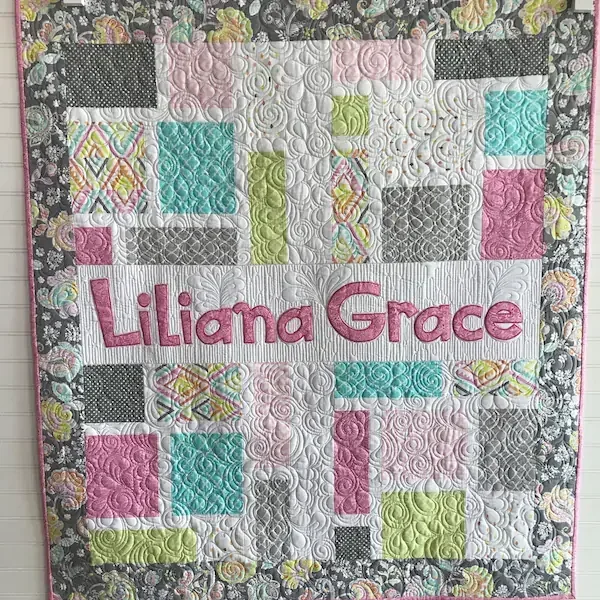
The best layout depends on the name length, the quilt’s finished shape, and how much visual emphasis you want the name to have. A centered name panel is straightforward for beginners because it separates lettering from the surrounding blocks. Individual letter blocks create a playful rhythm, but they require consistent block sizing and careful alignment.
Use a paper or digital sketch at a reduced scale before making a final cutting plan. Write the name in the intended style, mark each block, and leave space for seams. This check can reveal that a letter is too narrow, a border is too heavy, or the final letter is pushed too close to an edge.
Centered panel
Choose this if the name should be the main focal point. It offers one clear area for lettering and makes surrounding blocks easier to balance.
Letter blocks
Choose this if you want each character to stand apart. Keep block dimensions consistent and inspect the spacing between letters.
Monogram
Choose this if a full name would make the design crowded. Confirm which initial or initials the recipient expects before building the pattern.
How to Build the Pattern Plan
Build the baby name quilt pattern in stages: confirm the name, choose the lettering method, set the finished size, sketch the blocks, and only then calculate cutting pieces. This order prevents a common mistake—selecting decorative blocks first and discovering that the name no longer fits.
Pattern planning path
Verify spelling and marks.
Fit letters to the panel.
Separate letters from the ground.
Review seams and edges.
Write the exact name. Include capitalization, spaces, punctuation, and any accent marks. Don’t rely on memory or a rough verbal instruction.
Set the finished panel size. Decide how much room the name receives after seams and borders are accounted for. A pattern should identify finished dimensions separately from cutting dimensions.
Place the letters. Leave breathing room around the first and last characters. The visible letter area should not run into a seam or border.
Make a test sketch. Use scrap paper or fabric to check whether the letters look even when placed side by side. Reverse appliqué or curved letters may need extra room.
Check Contrast, Seams, and Letter Readability
Contrast matters because a name can disappear when the letter fabric and background are too similar. You don’t need a complicated color plan; you need a visible difference in lightness, darkness, or pattern density. Place the letter shape on the background and step back from the work area to check whether the name still reads clearly.
Small prints may look busy around narrow letters, while large motifs can interrupt a character’s shape. If the name uses several fabrics, repeat one background color to connect the blocks. Keep decorative details away from the letter edges unless the pattern deliberately uses an overlapping effect.
Plan Size and Intended Use
Choose the finished quilt size by its intended use, not just by the amount of fabric available. A wall display, stroller layer, supervised floor mat, and decorative bed covering may need different proportions. The name panel should remain readable in the setting where the quilt will usually be seen.
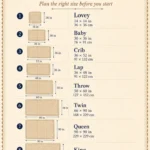
For dimension planning, compare the finished name panel with the surrounding borders and blocks. A useful reference is this baby blanket measurement chart, but treat any chart as a planning aid rather than a universal rule. Your pattern’s seam allowance, border arrangement, and quilting design can change the final dimensions.
If the quilt is intended for a baby’s sleep space, pause and confirm current safe-sleep guidance before using it that way. A decorative name quilt can be designed for display or supervised use without automatically being suitable as loose bedding. See the practical discussion of when a baby can have a blanket before making that decision.
Keep loose quilts, cords, detachable decorations, and small embellishments away from an infant’s sleep area unless current professional guidance says otherwise. When in doubt, use the quilt as a supervised or decorative item and confirm the intended use with a qualified health or safety professional.
Common Mistakes to Avoid
The most common error is designing the decorative area before confirming the name’s scale. Another is measuring only the visible letter and forgetting that the surrounding block, seam allowance, border, and quilting can reduce the space available.
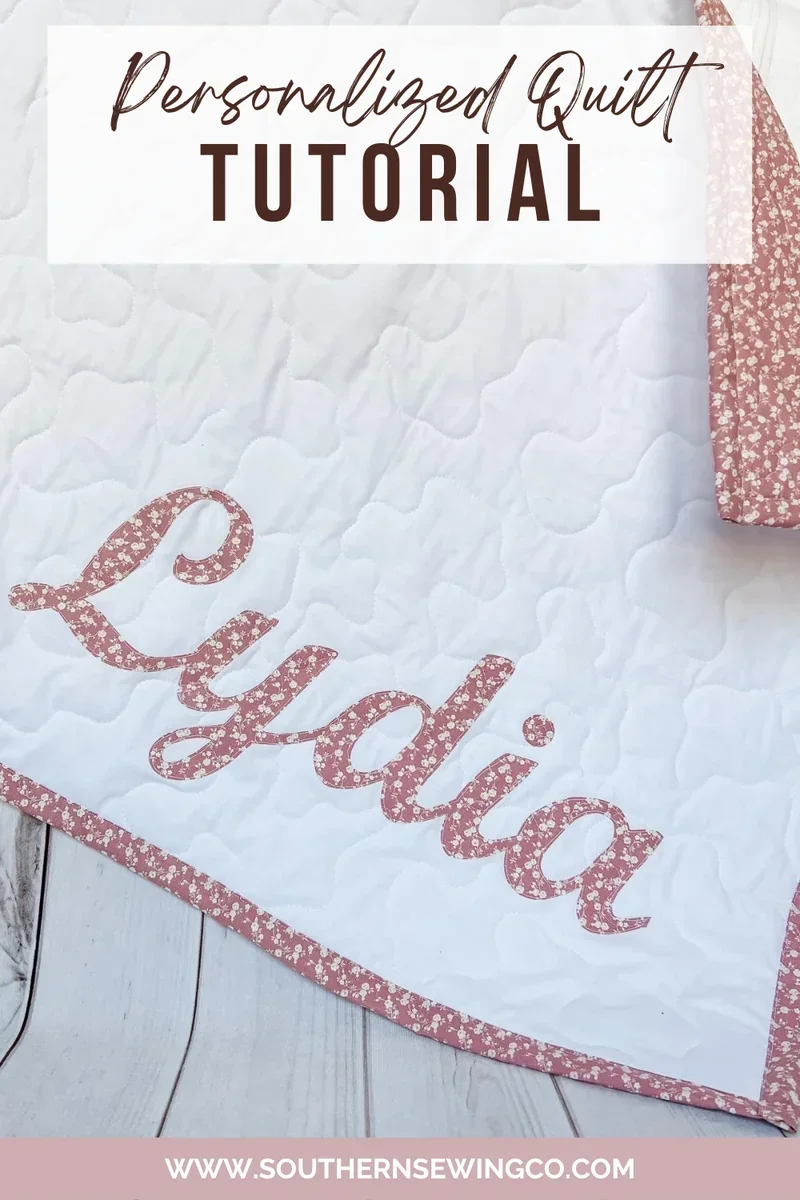
Also avoid assuming that every font or lettering template will behave the same way in fabric. Thin strokes can be hard to cut or stitch. Tight curves may distort. Mirrored templates may be needed for some appliqué methods. Make a small test letter when the method or fabric is unfamiliar.
Finally, don’t judge the layout only while it lies flat on the table. Rotate it, view it from farther away, and photograph the sketch if helpful. A name that seems centered during construction may look shifted once borders and corner blocks are added.
Finishing and Care Checks
Before finishing, inspect every letter edge, seam, and corner. Look for loose threads, lifting appliqué, open seams, or embellishments that could detach. The correct care method depends on the fabrics, thread, batting, adhesives, and finishing techniques used in the specific quilt.
Write the care details with the pattern notes while the materials are still known. If the quilt will be washed, test the planned method on a sample or spare block first. This helps reveal color transfer, shrinkage, distortion, or a weak attachment before the finished name quilt is exposed to the same process.
For storage, keep the quilt clean and completely dry, and avoid placing heavy objects on raised lettering for long periods. Fold lines can become more noticeable across appliqué or embroidery, so refold stored textiles occasionally if the design allows.
Keep a simple pattern record with the spelling, layout sketch, fabric placement, seam allowance, and care notes. That record makes later repairs easier and helps preserve the name’s exact design.
Baby Name Quilt Pattern FAQ
What is the easiest baby name quilt pattern for a beginner?
A centered name panel with simple borders is usually the easiest layout to plan because the lettering stays in one area. Start by sketching the name at the intended scale, then check the seams before cutting.
How do I fit a long name on a quilt?
Use a wider panel, smaller letters, two lines, or a monogram only after confirming the preferred name format. Make a paper mock-up first so the name does not become cramped.
Should the name quilt use matching fabrics?
Matching is optional. Repeating one background fabric can unify the design, while a clear contrast between letters and background helps the name remain readable.
Do seam allowances change the name layout?
Yes. Seams reduce the visible area and can cut through letters if they are placed too close to an edge. Mark finished dimensions and cutting dimensions separately.
Can a baby name quilt be used as a sleep blanket?
Not automatically. Intended use, the baby’s age, and current safe-sleep guidance matter. Treat the quilt as decorative or supervised until its sleep use has been confirmed.
What should I check before sewing the final blocks?
Check spelling, letter order, contrast, block orientation, seam placement, borders, and the finished size. Place every paper piece on the layout before sewing.
Final Thoughts
A successful baby name quilt pattern starts with accurate lettering and a realistic layout. Confirm the name, sketch the finished panel, check contrast and seams, then record the care and intended-use details. That simple process keeps the name readable and the finished quilt easier to maintain.