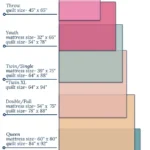
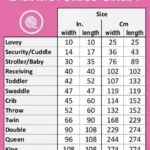
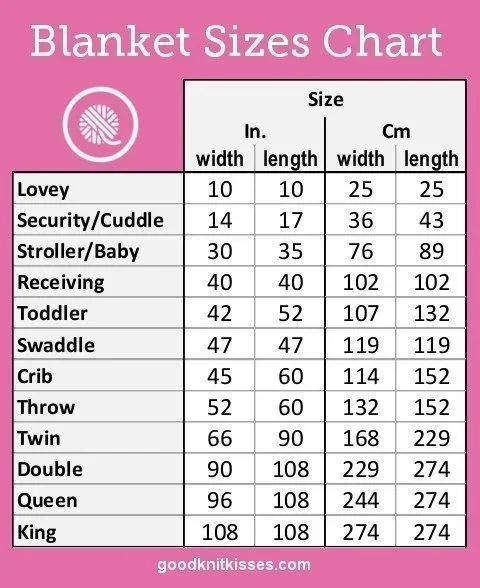
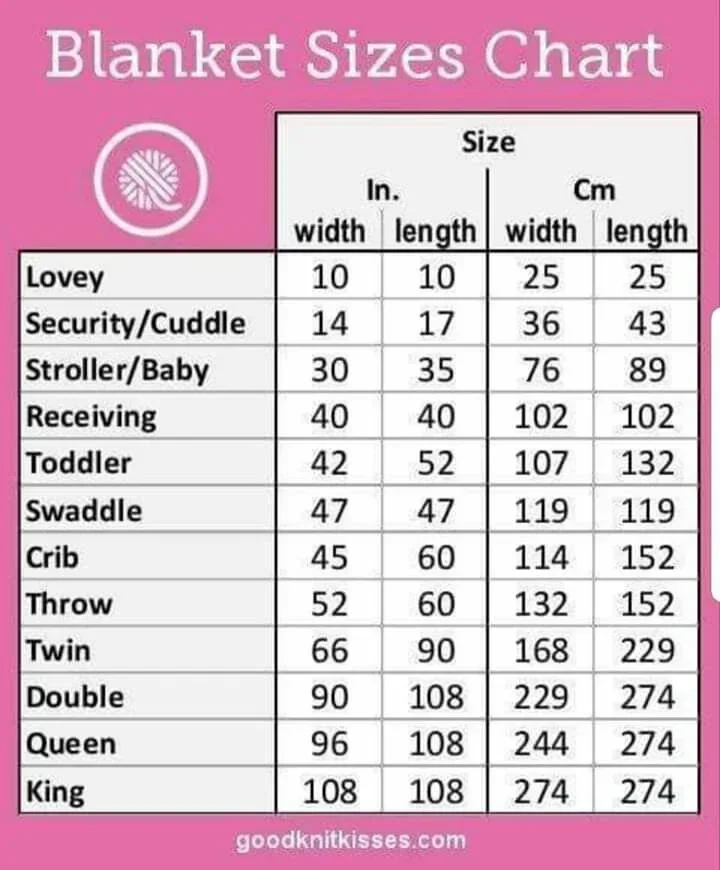
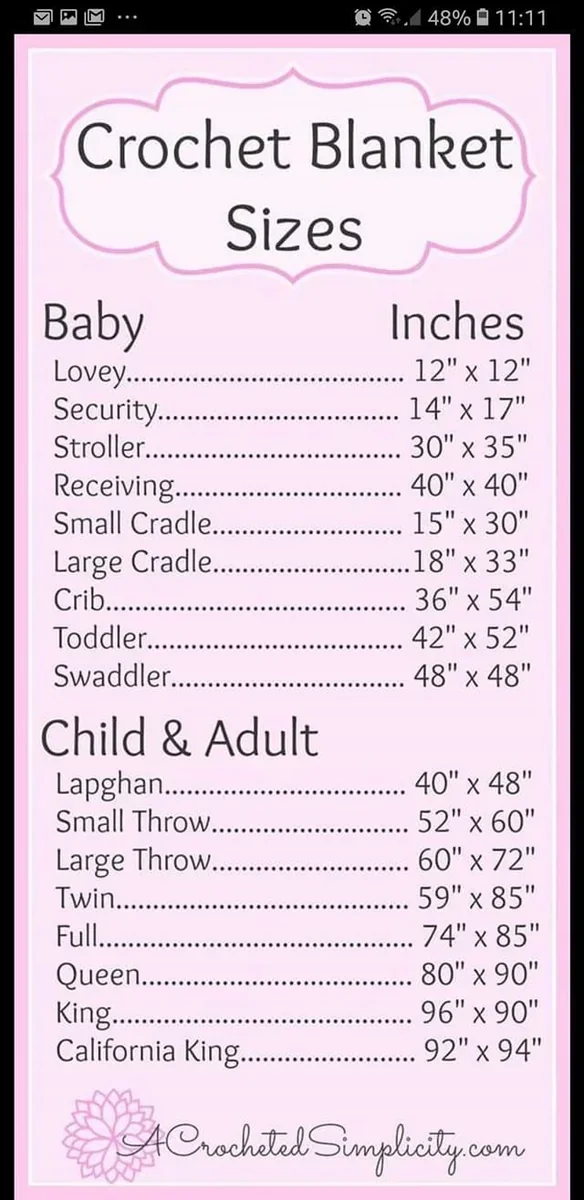
A baby blanket measurement chart compares blanket length and width by use. Measure the blanket flat, check the intended routine, and treat size as a planning guide—not proof that a blanket is suitable for unsupervised infant sleep.
A baby blanket measurement chart is useful because “baby blanket” can describe several different shapes and routines. A small square may work for supervised cuddling, while a larger rectangle may be intended for a stroller or floor activity. The correct measurement depends on how the blanket is used, how it is stored, and whether an adult is watching the baby.
This guide explains how to read a chart, measure an existing blanket, compare common use cases, and avoid treating a blanket’s dimensions as a safety rating.
Baby blanket measurement chart
Blanket dimensions
Supervised use
What a baby blanket measurement chart tells you
A baby blanket measurement chart shows the finished dimensions of a blanket, usually as width by length. It helps you compare the blanket’s physical size with a planned activity. It does not, by itself, identify the blanket’s material, thickness, warmth, stretch, edge finish, or safe use.
Start with the routine, not the label. A blanket used for brief, supervised tummy time has a different practical job from one carried in a diaper bag for short outdoor breaks. A blanket used around an older child also has a different context from one placed near an infant during sleep.
Measurements may vary slightly after washing, especially if the fabric changes shape. For an existing blanket, measure it flat and record the result in inches. For a handmade blanket, measure after finishing the edges because borders can add noticeable width and length.
Common measurements by intended use
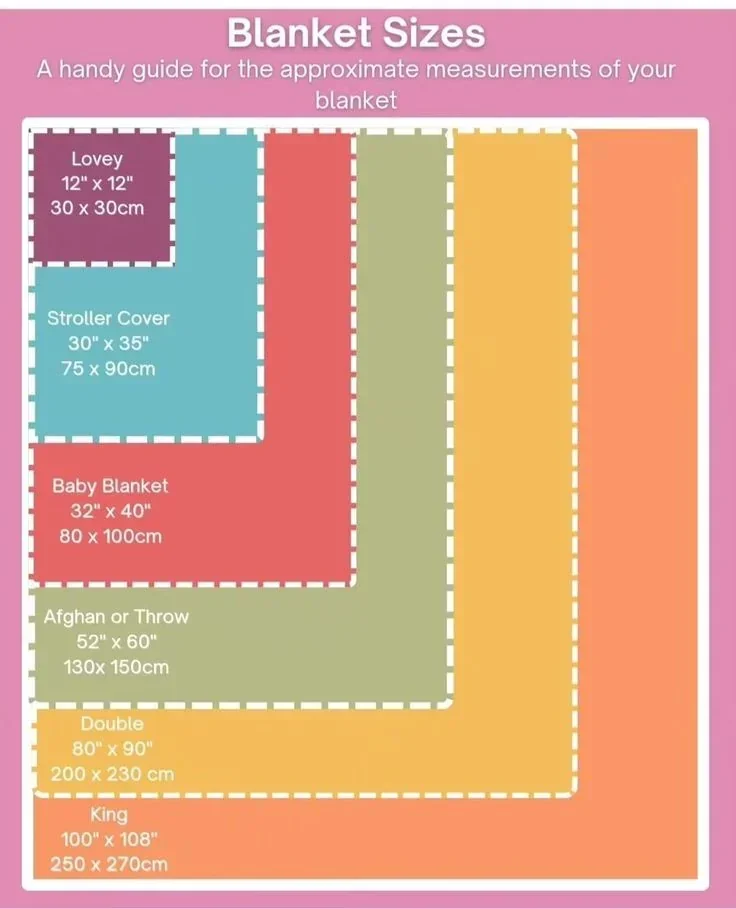
There is no single universal baby blanket size. A chart is most helpful when its measurements are connected to a specific use. The ranges below are practical comparison points, not mandatory standards. Check the actual dimensions whenever fit matters.
A smaller blanket is easier to fold and carry, but it may not cover a broad play surface. A larger blanket gives more coverage on the floor, yet it takes more space to wash, dry, fold, and store. The best match is the smallest size that serves the planned supervised activity without creating loose excess fabric.
The measurement decision path
Lap, floor activity, travel, or storage?
Record width and length without stretching.
Look for straps, edges, gaps, and loose fabric.
Use can change as the child grows or moves.
How to measure a baby blanket accurately
Measure the blanket on a clean, flat surface with the edges relaxed. Pulling a stretchy knit can make the result look larger than its normal usable size, while measuring a bunched blanket can make it look smaller.
Flatten the blanket. Smooth wrinkles without stretching the corners.
Measure the width. Place the tape across the widest straight section from finished edge to finished edge.
Measure the length. Run the tape from the top finished edge to the bottom finished edge.
Repeat the check. Measure near both sides if the blanket looks uneven, then record the smaller usable measurement.
For example, a blanket may measure 31 inches across one section and 32 inches across another. Recording it as approximately 31 by 32 inches is more honest than presenting a precise square measurement.
If you’re comparing a chart with a handmade pattern, confirm whether the listed figure is the finished size or the amount of fabric needed before sewing or crocheting. Those are not the same measurement.
Safety limits that a size chart cannot answer
A measurement chart cannot make a blanket appropriate for infant sleep. Size is only one factor, and a larger blanket can create more loose material around a baby. For current U.S. safe-sleep guidance, review the Consumer Product Safety Commission’s Safe Sleep information.
Keep sleep guidance separate from supervised awake activities. During an awake routine, an adult can watch the baby and remove the blanket if it shifts toward the face, becomes tangled, or creates a problem. That supervision does not automatically transfer to a crib, bassinet, or other sleep setting.
Transport adds another check. Never let a blanket interfere with harness straps, buckles, ventilation, or the caregiver’s view. Follow the instructions for the specific stroller, carrier, or car seat. If the blanket’s position is uncertain, remove it rather than relying on its listed dimensions.
Do not use a blanket measurement chart as permission to add loose bedding for infant sleep. If you’re unsure whether a blanket belongs in a particular sleep or transport setting, check the relevant safety guidance and product instructions first.
Common mistakes when reading the chart
The most common mistake is assuming that a familiar name describes a fixed size. Terms such as receiving blanket, stroller blanket, or security blanket may be used differently by different makers or families. Always compare the actual width and length.
Another mistake is measuring only the center. A stretched border, rounded corner, or uneven seam can change the usable shape. Check the edges and consider how the blanket folds. A blanket that fits one surface when flat may be too bulky when folded.
Care, storage, and when to recheck
Recheck a blanket after washing if its shape appears different. Lay it flat, let it return to its normal shape, and measure again. A change in size can affect whether it fits a travel pouch, activity area, or storage shelf.
Inspect the edges during the same routine. Stop using the blanket for its planned activity if seams open, trim detaches, holes appear, or threads become loose. These problems are separate from size, but they can change how the blanket behaves and whether it can catch on nearby parts.
Store blankets clean and completely dry. Fold them in a way that doesn’t place pressure on a stretched border. If several blankets are used for different routines, label the storage area by use rather than by vague size names.
Keep the chart nearby
Write the measured dimensions on a care note or storage label. This prevents guessing after the blanket has been folded.
Separate routines
A blanket used for supervised play should not automatically be treated as a sleep blanket. Context matters more than the label.
Practical examples for caregivers
Imagine a caregiver measures a square blanket at about 32 inches by 32 inches. That measurement may be convenient for folding and supervised floor activity, but the number alone does not answer whether the floor is clean, whether the baby is being watched, or whether the blanket could cover the face.
Now consider a long blanket measuring about 30 by 45 inches. Its extra length may be useful for a stroller routine, yet the caregiver must check that it cannot reach wheels, straps, buckles, or the child’s face. A longer blanket is not automatically more useful.
For families thinking about comfort objects, a security blanket has its own routine and safety questions. Read more about what a security blanket is for babies, and keep that topic separate from a general measurement chart.
A simple planning checklist
Use this checklist before assigning a blanket to a routine. It works for an existing blanket, a handmade project, or a pattern comparison.
- Write down the intended routine.
- Measure the finished blanket flat and relaxed.
- Check thickness, stretch, borders, and loose threads.
- Confirm that the blanket won’t interfere with straps or openings.
- Keep infant sleep guidance separate from supervised awake use.
If your question is specifically about when a blanket may be appropriate, review this related guide on when a baby can have a blanket. The answer depends on the situation, not just the blanket’s measurements.
Frequently asked questions
What is the most common baby blanket size?
There is no single universal size. Small square blankets may suit lap use, while larger square or rectangular blankets may suit supervised activity or travel. Compare actual dimensions and intended use. Next, measure the blanket flat.
Are baby blanket measurements exact standards?
No. Names and size labels can vary, and handmade blankets may change slightly after finishing or washing. Treat chart figures as planning ranges and check the finished width and length. Next, record the smaller usable measurement if edges vary.
Can a baby blanket size chart tell me if it is safe for sleep?
No. Dimensions cannot determine sleep safety. Keep infant sleep guidance separate from supervised awake use and review current safe-sleep information. Next, check the intended setting before using the blanket.
How should I measure a stretchy baby blanket?
Lay it flat and relaxed without pulling the fabric. Measure width and length in more than one place if the shape looks uneven. Next, use the relaxed measurement for planning.
Should stroller blanket measurements include extra length?
Extra length is not automatically better. Check that the blanket cannot reach wheels, straps, buckles, openings, or the baby’s face. Next, follow the stroller or carrier instructions.
When should I remeasure a baby blanket?
Remeasure after washing if the shape changes, after repairs, or whenever you assign the blanket to a new routine. Next, inspect seams and edges at the same time.
Final thoughts
Use a baby blanket measurement chart to compare dimensions, plan storage, and match a blanket to a supervised routine. Measure the finished blanket flat, check how it behaves when folded, and keep size questions separate from sleep and transport safety decisions.