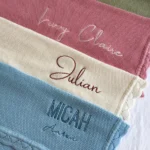
Quick Answer: Put a baby’s name on a blanket by choosing a safe location, marking the name clearly, applying embroidery or a fabric-safe method, and checking every edge and thread afterward. Wash and inspect the blanket according to its fabric and personalization method.
A name can turn an ordinary baby blanket into a meaningful keepsake, but the lettering should be planned around the blanket’s fabric, use, and care instructions. This guide explains how to put names on baby blankets neatly, how to choose a method, and how to check the finished result before the blanket is used.
Personalized blankets
Name placement
Start With the Blanket and the Name
Begin by deciding what the blanket is for. A small receiving blanket, stroller blanket, decorative nursery blanket, and keepsake may need different placement and care. A name that looks balanced on a large, flat blanket may feel crowded on a narrow one.
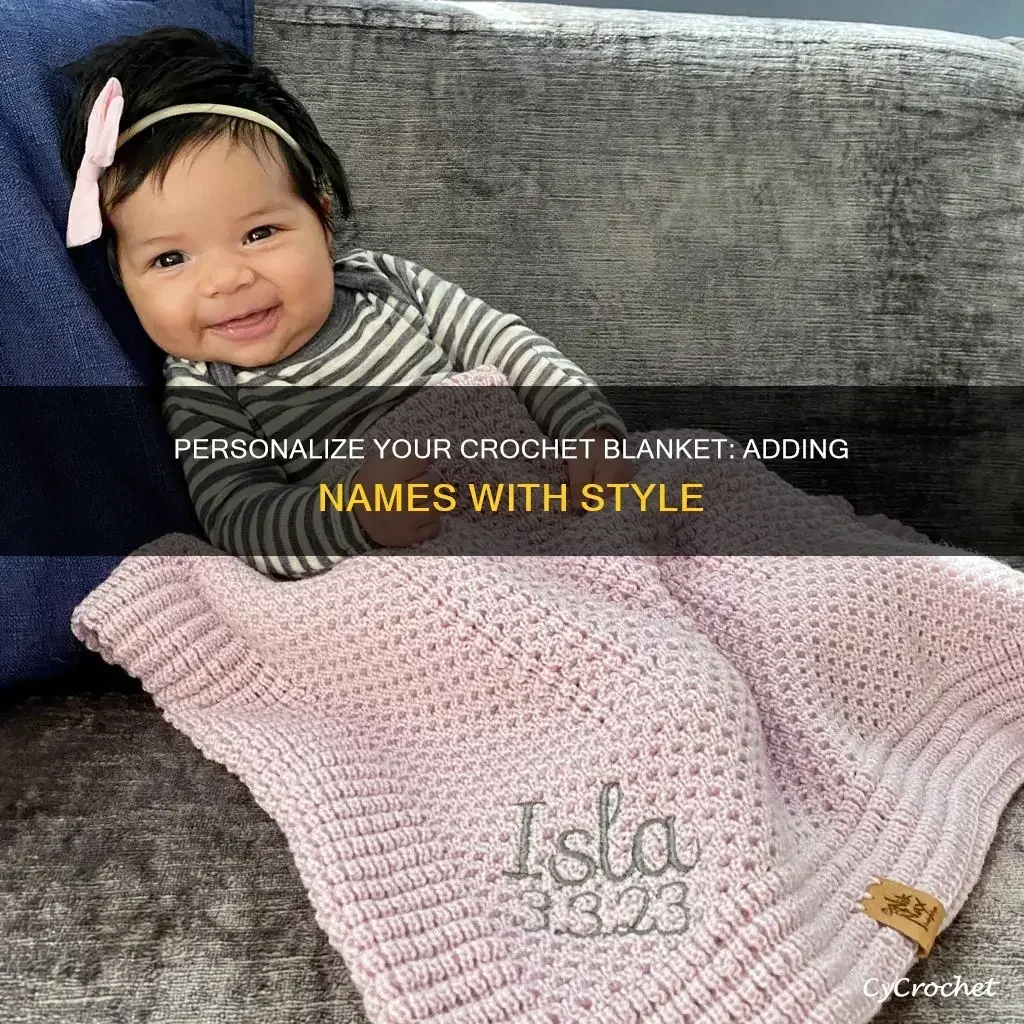
Next, write the exact name, initials, or short phrase on paper. Check capitalization, spelling, spacing, and any accent marks before transferring it. If the name has more than one word, test the line break first. For example, “Maya Rose” may fit on one line, while a longer full name may look cleaner with the first and middle names separated.
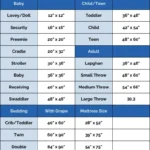
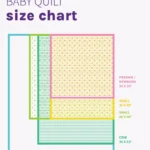
Measure the usable area rather than the full blanket. Seams, edging, rounded corners, raised patterns, and very stretchy sections can make lettering uneven. The baby blanket measurement chart can help you think about the blanket’s overall size before choosing lettering dimensions.
Exact spelling, wording, and preferred style.
Flat, visible space away from seams and edges.
Use a method suited to the fabric and care routine.
Look for loose threads, lifted edges, or bleeding color.
Choose a Name-Personalization Method
The best method depends on the blanket’s texture, stretch, thickness, and expected washing. No single technique works equally well on every blanket. Test the method on a hidden corner or spare piece of the same fabric when possible.
A textured, fuzzy, or highly stretchy blanket can distort thin letters. In that case, use a short name, wider lettering, or a separate flat label rather than forcing a detailed design into an uneven area.
How to Put the Name on the Blanket
Use this sequence whether you are stitching, writing, sewing on a label, or applying fabric lettering. The goal is to prevent a crooked name, incorrect spelling, or finish that changes after washing.
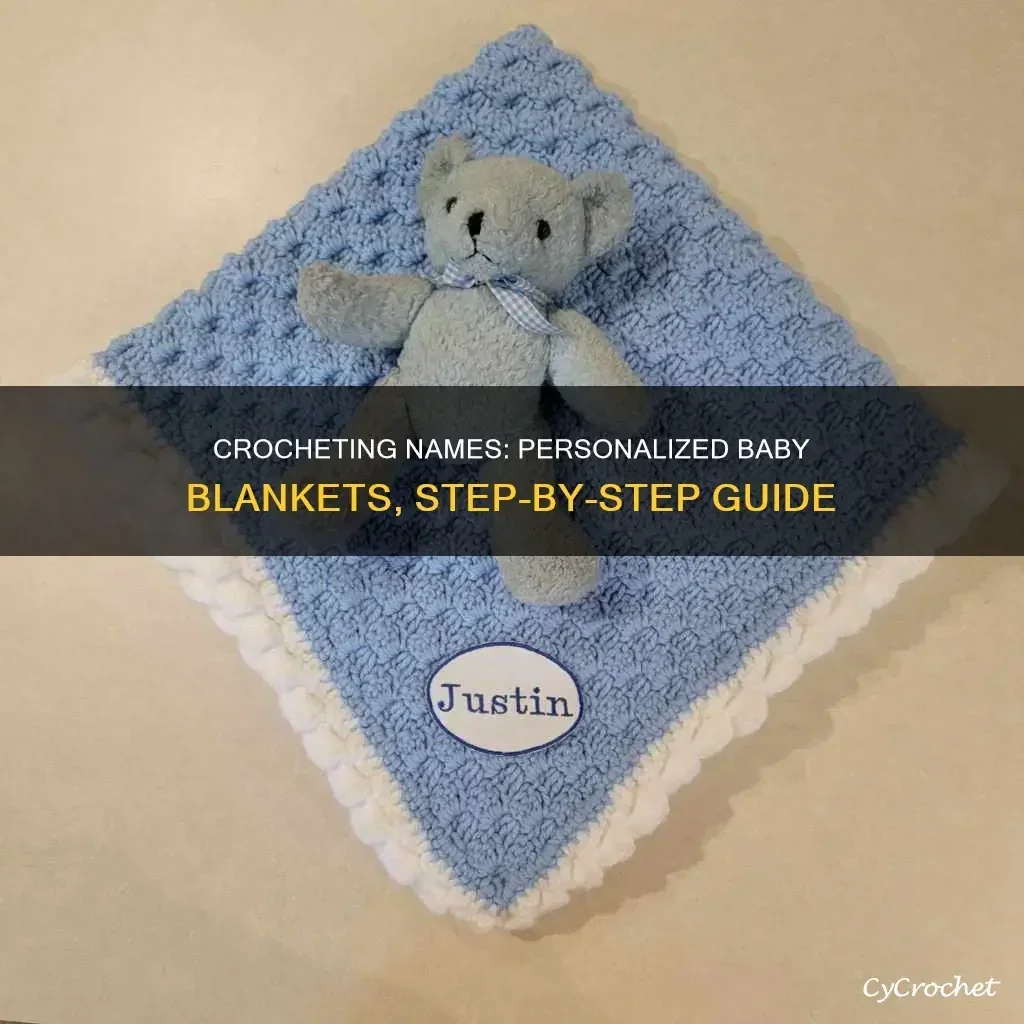
Prepare the surface. Wash and dry the blanket only if the care instructions allow it, then remove lint and place it on a clean, flat surface. A smooth base makes it easier to judge spacing.
Make a paper template. Write or print the name at the intended size. Place the template on the blanket and view it from a short distance. This reveals whether the name is too small, too close to an edge, or visually unbalanced.
Mark guide points. Use removable markings or pins outside the final lettering area. Check the center point and baseline so the first and last letters do not drift upward or downward.
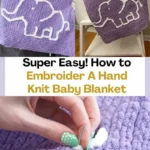
Apply the lettering slowly. For embroidery, keep the tension even and avoid pulling the fabric into ripples. For a marker, use light passes instead of pressing hard. For a label or applied lettering, follow the method’s fabric-specific directions.
Let the finish settle. Do not fold or wash the blanket immediately if the method needs time to dry, cool, or bond. Keep it flat while you inspect the letters.
Check Placement, Readability, and Finish
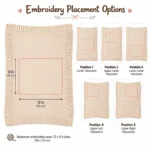
Place the name where it can be seen when the blanket is folded, but avoid putting it directly on a seam, binding, or corner that receives extra pulling. A centered name often works for a decorative blanket. A lower corner or edge area may be easier to read when the blanket is folded, but it can experience more handling.
Contrast matters. Dark lettering on a pale blanket and light lettering on a darker blanket are generally easier to read than similar shades. Still, the fabric pattern can interfere with visibility. Stand back and check the name in ordinary room light rather than judging it only up close.
Good placement signs
The name is level, readable, clear of bulky seams, and surrounded by enough blank space to look intentional.
Pause and revise signs
Letters touch the border, disappear into the pattern, pucker the fabric, or look too small to identify at a glance.
Personalization does not change a blanket’s suitability for infant sleep. Check the intended use separately, and keep inspecting for loose threads, lifted labels, detached lettering, or small pieces. Stop using the blanket until the problem is repaired or removed.
Wash and Maintain the Personalized Blanket
Care for the finished blanket according to the blanket’s care instructions and the personalization method. Heat, agitation, moisture, and friction can affect thread, ink, labels, or applied lettering differently. If the two sets of instructions conflict, avoid guessing; use the more restrictive instruction or seek guidance from the method’s instructions.
Before the first regular wash, inspect the name closely. Turn the blanket inside out when that is compatible with its care instructions, use a gentle routine if permitted, and avoid harsh handling of a newly finished area. These are general handling considerations, not a replacement for the specific care label.
Common Mistakes to Avoid
The most common mistake is applying the name before confirming the final wording. A second is choosing a method because it looks attractive on one fabric, then using it on a different texture without testing. Stretchy fleece, knitted fabric, smooth cotton, and plush surfaces can respond differently.
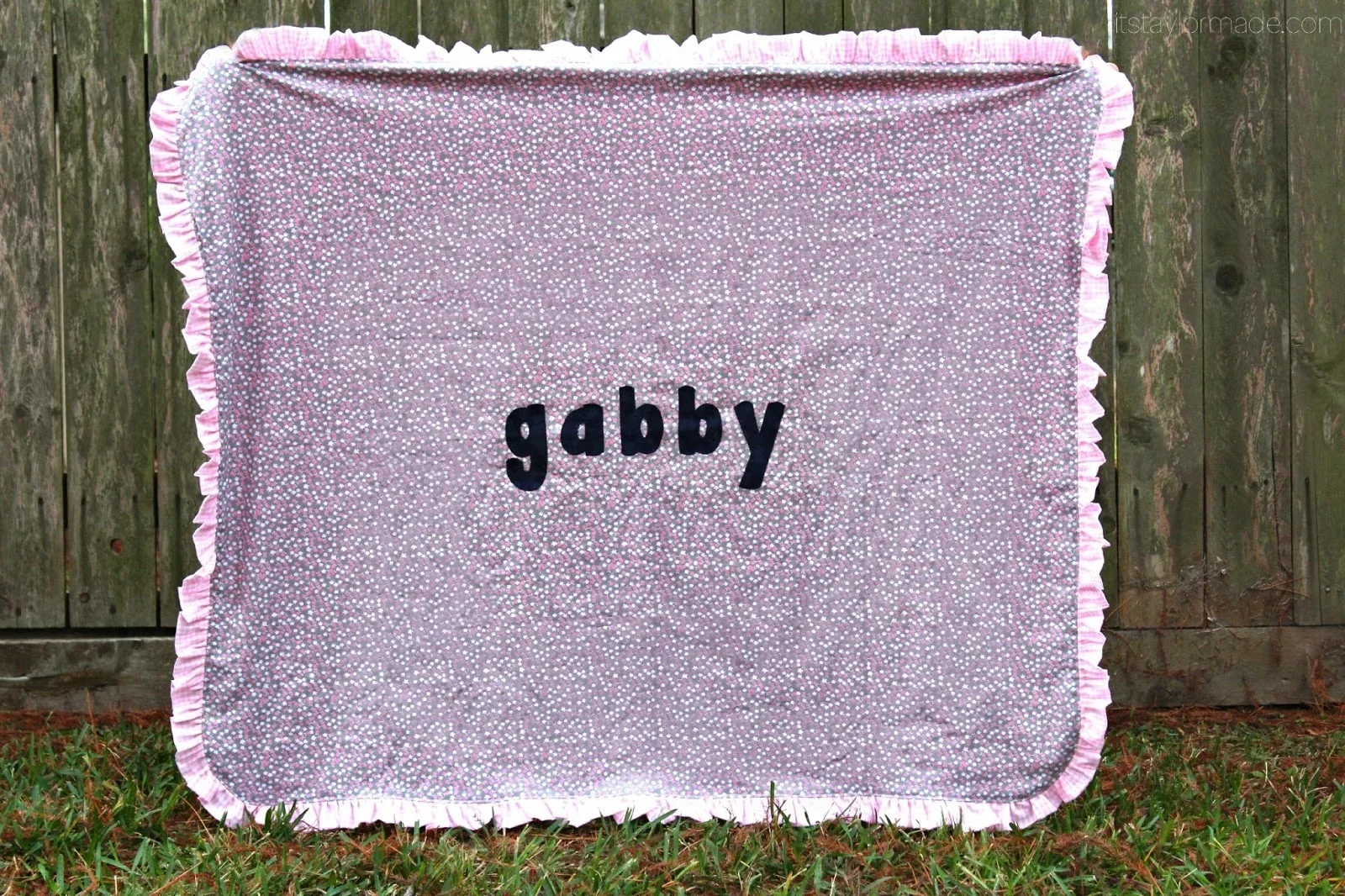
Another mistake is placing the name too close to the edge. Edges are folded, gripped, and washed repeatedly, so they may receive more stress. Avoid very fine lettering if the blanket has a deep pile or busy print. Simple block letters are often easier to inspect than delicate details.
Finally, don’t assume a firmly attached name is permanent. Examine the blanket after washing and after periods of regular handling. If the personalization becomes loose, rough, or damaged, set it aside until it is corrected.
If you’re still choosing the wording, browse these baby blanket name ideas first. Keep the final phrase short enough to read clearly and leave comfortable space around it.
Make the Name Meaningful Without Overcomplicating It
A blanket name can be the baby’s first name, initials, a family nickname, or a short phrase. The right choice depends on whether the blanket is meant for daily identification, a gift, or a keepsake. If you’re comparing names, consider pronunciation, spelling, and how the lettering will look—not only the meaning.
For inspiration, you might review meaningful baby boy names or explore another naming list that fits your family’s preferences. Once you choose, write the name exactly as it should appear and keep a record of the spelling before you begin.
When to Repair or Set the Blanket Aside
Repair the personalization when a thread is loose but the surrounding fabric remains sound and the repair can be made securely. Set the blanket aside when a label is lifting, lettering is peeling, or a small part can detach. A cosmetic flaw may be acceptable for a keepsake, but a loose component should not be ignored when the blanket is around a baby.
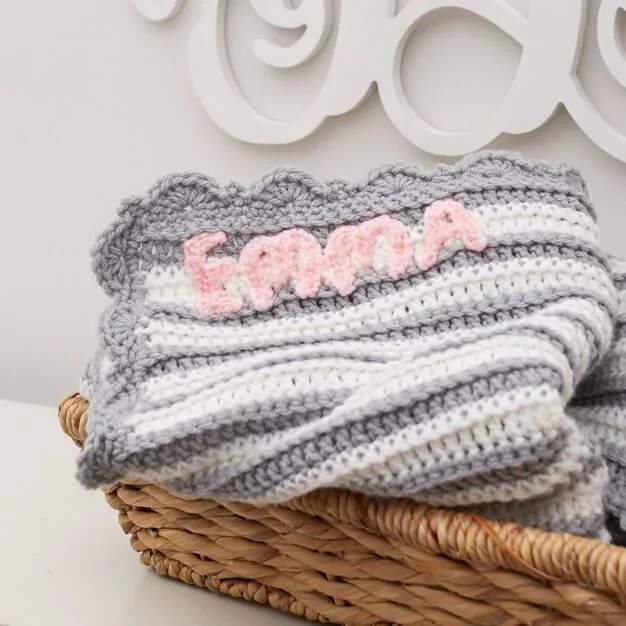
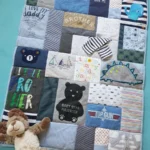
If the fabric itself is damaged, stretched out, or weakened near the name, don’t simply add more stitches over the problem. The underlying material may need a different repair approach. For a sentimental blanket, preserving it as a keepsake rather than continuing daily use may be the more practical choice.
Frequently Asked Questions
What is the easiest way to put a name on a baby blanket?
A fabric marker is usually the simplest method for a smooth, suitable surface. Test a hidden area first, write slowly, and check that the ink does not bleed. Your next step is to confirm the blanket’s care instructions.
Where should a baby’s name go on a blanket?
Choose a flat, visible area away from seams, thick edging, and corners. Center placement suits many decorative blankets, while a lower corner may be easier to see when folded. Place a paper template first to check the balance.
Is embroidery suitable for every baby blanket?
No. Embroidery may pucker thin or stretchy fabric and can look uneven on a deep pile. Test the fabric first and stop if the stitches distort the blanket or cannot be secured neatly.
Can I put a full name on a baby blanket?
Yes, if the blanket has enough flat space and the name remains readable. A shorter first name or initials may work better on a small blanket. Write the complete wording on paper before applying it.
How do I keep a personalized baby blanket looking neat?
Follow the blanket and personalization care instructions, avoid harsh handling, and inspect the name after washing. Repair loose stitching or lifted lettering before using the blanket again.
Does putting a name on a blanket make it safe for infant sleep?
No. Personalization does not determine sleep safety. Consider the blanket’s intended use separately and inspect it for loose threads, detached lettering, or other damage before each use. Check the relevant infant-sleep guidance for your situation.
Final Thoughts
The reliable way to put names on baby blankets is to plan the wording, match the method to the fabric, place the name on a flat area, and inspect the result after care. Start with a paper template and a hidden-fabric test before completing the final lettering.